Norway's Coastal Highway Project E39: Engineering the Future
Norway is embarking on the largest infrastructure project in the country's history: the transformation of the E39 Coastal Highway into a continuous, ferry-free route connecting the entire western coast. This ambitious €47 billion undertaking represents not just an engineering marvel, but a revolutionary approach to connecting communities, enhancing commerce, and creating sustainable transportation infrastructure for the 21st century.
The Vision: Ferry-Free Western Norway
The E39 Coastal Highway Project aims to eliminate all ferry crossings along Norway's 1,330-kilometer western coast, creating an uninterrupted drive from Kristiansund in the north to Kristiansand in the south. Currently, travelers must board ferries eight times to complete this journey, extending travel time to 21 hours. Upon completion, this will be reduced to just 10 hours of continuous driving.
This transformation is particularly significant given that the western coast generates approximately 60% of Norway's export value and serves 1.8 million residents across six regions. The project will connect major cities including Bergen, Molde, Ålesund, Stavanger, and Trondheim, fundamentally changing how people and goods move through western Norway.
Engineering Challenges: Conquering the Fjords
The Norwegian coastline presents some of the world's most challenging engineering obstacles. Deep fjords with depths reaching 1,300 meters, combined with harsh Atlantic weather conditions, require innovative solutions that push the boundaries of modern engineering. Traditional bridge construction with seabed foundations is impossible due to extreme depths, necessitating revolutionary approaches.
World-First Technologies
The project is pioneering several world-first technologies, including submerged floating tunnels that will hang suspended beneath the water's surface. These underwater passages will allow ships to pass overhead while providing a stable route for vehicles below. The engineering challenge involves creating structures that can withstand powerful currents, storms, and the constant motion of Atlantic waters.
Floating bridges anchored to artificial seabeds represent another innovative solution. These structures will span distances too wide for conventional suspension bridges while handling the dynamic forces of wind and waves. The Bjørnafjord crossing, planned as a 5-kilometer floating bridge, could become the world's longest of its type.
Current Progress and Timeline
As of 2025, approximately 11% of the E39 project has been completed. The Norwegian Public Roads Administration (NPRA) initially targeted completion by 2038, though the enormous scale and cost have led to a more flexible timeline extending into the 2040s. Politicians are prioritizing sections with the highest socio-economic benefits, focusing on crossings that will have the most immediate impact on regional connectivity.
Active Construction Projects
Several major components are currently under development or construction. The Sotra Connection, a €1 billion project led by the Webuild Group consortium, includes 9.4 kilometers of highways, a 900-meter suspension bridge, and 12.5 kilometers of tunnels. This project demonstrates the scale and complexity typical of E39 components.
The Molde to Ålesund section represents one of the most challenging segments currently in the tendering process, requiring multiple bridges, tunnels, and an underwater tunnel to navigate the complex fjord geography of the region.
The Atlantic Road: Proof of Concept
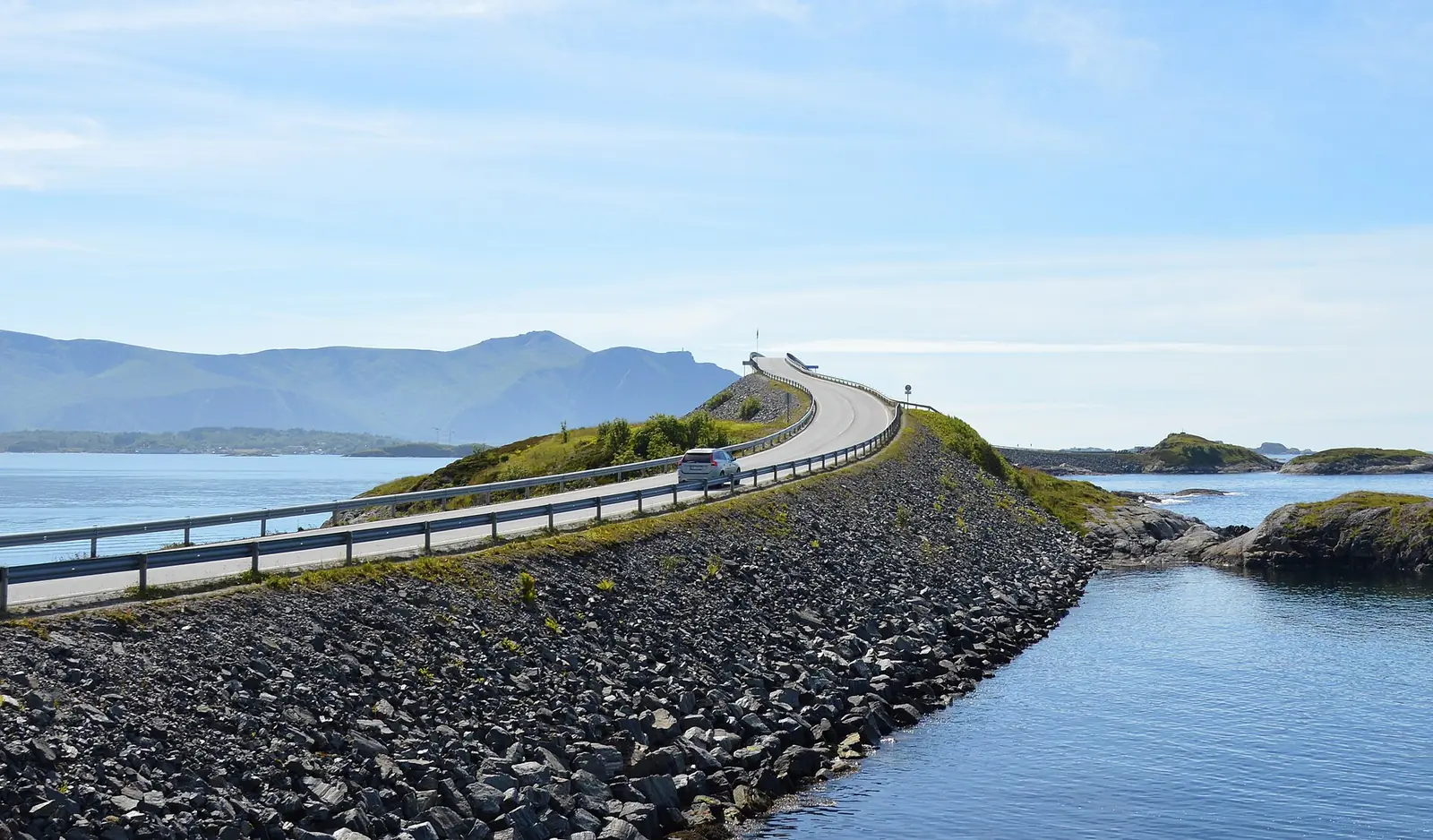
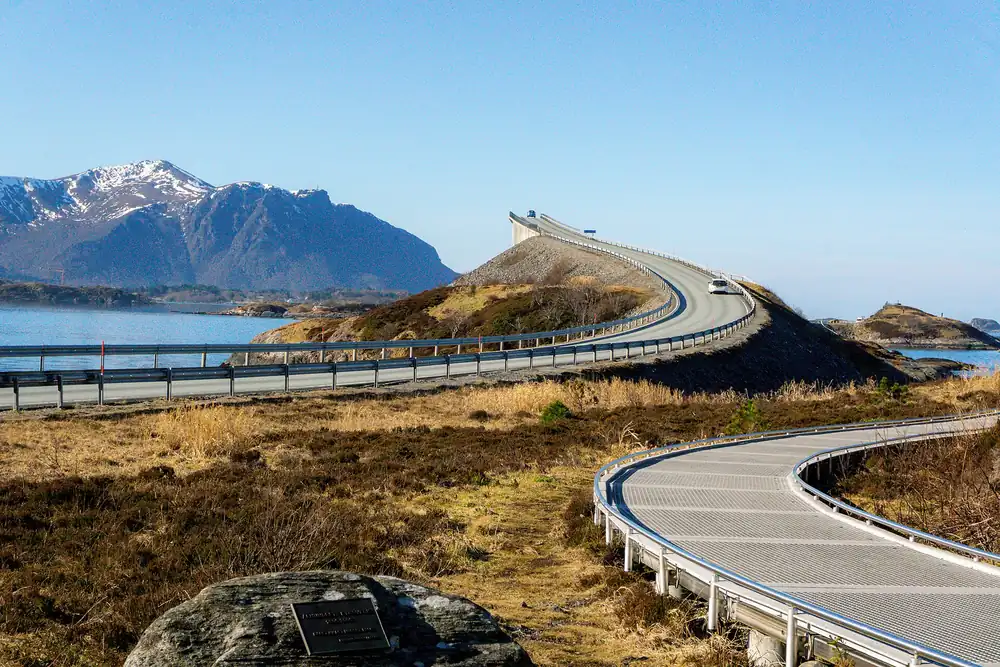
The existing Atlantic Road, completed in 1989, serves as both inspiration and proof of concept for the larger E39 project. This 8.3-kilometer engineering marvel demonstrated that Norway could successfully build dramatic coastal infrastructure that enhances both transportation and tourism. The Atlantic Road's success in attracting millions of visitors while serving local communities provides a model for how the expanded E39 can generate economic benefits beyond transportation.
The famous Storseisundet Bridge on the Atlantic Road, with its dramatic curves and "road to nowhere" optical illusion, showcases Norwegian expertise in creating infrastructure that serves practical needs while becoming destinations in their own right.
Innovative Crossing Solutions
Boknafjorden: The Deepest Challenge
The Boknafjorden crossing north of Stavanger will feature the world's longest and deepest subsea road tunnel. At 26.7 kilometers long and reaching 390 meters below sea level, this tunnel will surpass current world records while providing a reliable alternative to ferry service in one of Norway's busiest shipping corridors.
Sognefjorden: The Deepest Fjord
Sognefjorden, Norway's longest and deepest fjord at 1,300 meters depth, presents the ultimate engineering challenge. Multiple solutions are being evaluated, including the world's first submerged floating tunnel. This revolutionary concept would create an underwater tube suspended beneath the fjord's surface, allowing both vehicle traffic below and ship traffic above.
Sustainability and Future-Proofing
The E39 project embodies Norway's commitment to sustainable infrastructure. All structures are designed with 200-year service lives, dramatically reducing long-term environmental impact compared to traditional infrastructure requiring regular replacement. The project incorporates preparation for electric and hydrogen-powered vehicles, ensuring the highway remains relevant as transportation technology evolves.
Advanced materials research, including graphene-based composites, is being integrated into construction methods to create stronger, lighter, and more durable structures. Solar panel integration and inductive charging systems for electric vehicles are being planned for future implementation.
Economic and Social Impact
The E39 project represents far more than infrastructure improvement. Economic modeling predicts a 50% reduction in goods transportation costs along the western coast, significantly enhancing Norway's export competitiveness. Remote communities currently isolated during storm seasons will gain reliable year-round access to services, employment, and markets.
Tourism benefits are expected to be substantial, with each completed section likely to become a destination attraction similar to the current Atlantic Road. The project is creating thousands of construction jobs and establishing Norway as a world leader in advanced infrastructure technology.
Regional Transformation
Small fishing communities and island populations that have depended on unreliable ferry connections for generations will experience unprecedented connectivity. This access is expected to reverse population decline in remote areas while enabling new economic opportunities based on improved transportation links.
The project strengthens Norway's position as a gateway for Arctic shipping routes and enhances connections to major European markets. Improved freight efficiency supports Norway's role in global energy and seafood exports.
International Recognition
The E39 Coastal Highway Project has attracted global attention from engineers, urban planners, and infrastructure specialists. The innovative technologies being developed for Norwegian fjords have applications worldwide, from island nations to coastal regions facing similar geographical challenges.
International partnerships with engineering firms from across Europe and beyond are accelerating technology development while sharing costs and expertise. The project serves as a model for other nations considering major infrastructure transformation.
Visitor Experience
When completed, the E39 will offer one of the world's most spectacular road trip experiences. Travelers will journey through floating tunnels beneath crystalline fjords, cross suspension bridges spanning dramatic waterways, and traverse landscapes that showcase Norway's natural beauty and engineering prowess.
Planning is already underway for visitor centers, scenic overlooks, and educational facilities that will help tourists understand both the natural environment and the engineering achievements that make their journey possible.
Looking Forward
The E39 Coastal Highway Project represents Norway's vision for infrastructure that serves both immediate practical needs and long-term national development. As climate change makes traditional ferry operations increasingly challenging, this project ensures reliable transportation regardless of weather conditions.
The technological innovations being developed will position Norway as a leader in coastal infrastructure solutions, potentially creating new export industries based on engineering expertise and advanced construction techniques.
For travelers planning to experience Norway's coastal beauty, the current Atlantic Road journey offers a preview of the engineering marvels that will define the completed E39. Each completed section will add new dimensions to Norway's appeal as a destination where human engineering harmonizes with natural splendor.
Experience the Future Today: Visit the Atlantic Road to witness Norwegian coastal engineering excellence and imagine the transformed landscape that will emerge as the E39 project reaches completion. This remarkable undertaking continues Norway's tradition of creating infrastructure that enhances both daily life and the visitor experience.
The Norway Coastal Highway Project E39 represents more than transportation infrastructure—it embodies Norway's commitment to connecting communities, preserving environments, and creating engineering solutions that inspire the world.